
Golden Bay Ward Candidates
For transparency, candidates were informed that their responses to the Local Matters survey would be published unedited.
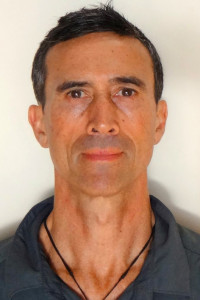
Rodney Barker
| 1. What is your plan to reduce the risk of and prepare Tasman for worsening weather events? We need science-based planning using planetary boundaries to guide land use, food systems, and infrastructure. Resilience means restoring wetlands, avoiding building in risk zones, and supporting local food. We must also invest in public education—many still downplay the risks. Prepared communities, informed by science, are key to facing worsening climate impacts across Tasman and beyond. |
| 2. What do you think good rural and urban planning looks like for Tasman? Good planning respects ecological limits and prepares for climate impacts. Urban growth must be compact, with housing near services, not sprawl. Rural planning should protect water, soils, and biodiversity, and support resilient food production. All planning must include public input, mātauranga Māori, and education—so communities can shape a future that’s fair, liveable, and within environmental limits. |
| 3. Given the tight Council budgets, how would you still support the most vulnerable in our community? Support means rethinking priorities. We can partner with community groups and regulate short-term rentals to ease pressure on housing. Council must stop funnelling funds into oversized projects (growth for the sake of growth) and focus on core needs like housing, transport, and local food. Planning with vulnerable communities builds long-term resilience without requiring huge budgets. |
| 4. What is your position on large impact projects like Sam’s Creek gold mine, Hope bypass or the Māpua fast-tracked housing development? These projects must be assessed against ecological limits, long-term community impact, and public input—not rushed through for short-term gain. I oppose fast-tracking processes that sideline communities and ignore cumulative harm. Projects like Sam’s Creek and Māpua must prove they won’t worsen inequality, pollution, or emissions. Big decisions need transparent, science-based, and locally informed scrutiny. |
| 5. Tasman voters will decide whether to keep the Māori ward in the upcoming referendum. What is your position, and why? I support keeping the Māori ward. It’s a step toward honouring Te Tiriti o Waitangi and ensuring Māori have a seat at the table in decisions that affect their whenua and communities. This isn’t about division, it’s about inclusion and equity. Strengthening Māori representation enriches democracy and helps Council make better, more grounded decisions for everyone in the district. |
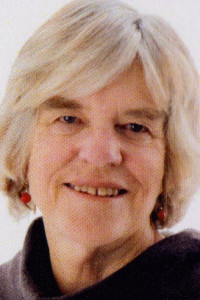
Celia Butler
| 1. What is your plan to reduce the risk of and prepare Tasman for worsening weather events? To improve resilience in Golden Bay, continue to improve civil defence arrangements, including communications and equipment. Lobby government for improved comms due to one fibreoptic cable to Golden Bay. Build in safe locations. |
| 2. What do you think good rural and urban planning looks like for Tasman? Needs to take natural hazards into account and avoid urban sprawl though there is a balance to be struck between greenfield and brownfields. Consider infrastructure first. |
| 3. Given the tight Council budgets, how would you still support the most vulnerable in our community? Use the means that are available to Council such as grants, and staff support. Keep pensioner housing rents down. Take decisions that support social housing. |
| 4. What is your position on large impact projects like Sam’s Creek gold mine, Hope bypass or the Māpua fast-tracked housing development? The goldmine is a potential risk to freshwater including the Waikoropupu Springs. This consideration should be paramount when decisions are made about the goldmine. The Hope bypass is a NZTA project. Council does not fund it. Some new infrastructure is necessary for primary produce to reach Port Nelson. |
| 5. Tasman voters will decide whether to keep the Māori ward in the upcoming referendum. What is your position, and why? Maori input is an essential part of planning. Ensuring that they are at the table is the best way to guarantee this. |

Axel Downward-Wilke
| 1. What is your plan to reduce the risk of and prepare Tasman for worsening weather events? I’ve initiated project STRIM: Strengthening telecommunications resilience in Mohua. We are on a single fibre optic cable. When that breaks, there are no services beyond that point. Strengthening transport resilience at Waitapu Splash (STRAWS). As a transport engineer, I’ve initiated discussions with NZTA managers about Waitapu Splash. Council must become more of an enabler for residents to install their coastal rock protection. I want to shift council’s attitude so that it’s resident-focussed. |
| 2. What do you think good rural and urban planning looks like for Tasman? Planning must balance population growth with environmental protection, while enhancing community well-being and economic opportunities. New housing areas should be close to Tākaka to minimise traffic and be within easy cycling distance, with the GB Cycle & Walkways Society (which I chair) providing the trail infrastructure. Zoning and infrastructure planning must consider local character. |
| 3. Given the tight Council budgets, how would you still support the most vulnerable in our community? Non-residents buy up properties, which drives up rents and house prices. TDC should support Chris Bennett’s Affordable Housing Project better. I suggest a targeted rate for properties used as baches for social housing funds. As there is no public transport in Mohua, I would like to explore with the Ministry of Education what rules need to be changed to allow adults on school buses. The Cycle and Walkways Society’s planned Tākaka–Collingwood Trail would provide safe and cheap town access. |
| 4. What is your position on large impact projects like Sam’s Creek gold mine, Hope bypass or the Māpua fast-tracked housing development? I’m a founding and active member of Sams Creek Collective, a group that formed to fight the mine by ensuring that the public is kept informed about what is being proposed. We have held public meeting, rallies, presented to council and other groups, stood up a website, lobbied ministers, and analysed Siren Gold’s proposals to determine the implications for our community. While I don’t live in the Tākaka Valley, I care about all parts of my community. We work alongside Save our Springs (SOS). |
| 5. Tasman voters will decide whether to keep the Māori ward in the upcoming referendum. What is your position, and why? Keep the Māori ward. Tasman is divided into wards. This ensures that the rural wards have representation, and that the more populous Richmond area does not dominate the election outcome. The same principle should be used for Māori, who when standing in the various wards have a low chance of success, as pākehā voters dominate. Having a Māori ward ensures that there is Māori representation at the council table, and will meet the legislative requirement of Māori involvement in decision-making. |

Julian Hall
No response received
Mark Hume
No response received
 Local Matters